Revisiting @mattgoldenberg's tweet here, & realized suddenly that this implies that CDT (Kegan's model) combines the "Grow Up" & "Clean Up" dimensions. Developing more nuanced constructs isn't enough to uplevel; must also unlearn older constructs.
Kegan stages as both growing up and cleaning up
11 tweets · April 2020 · 11 likes · 0 retweets · read on Twitter
This fusion isn't per se a problem with CDT—it may actually be an advantage in some circumstances, especially if people are aware of it (I definitely wasn't, when I first learned the model) and of its implications (still not sure I understand those!)
One weird implication... effectively a regression in Kegan stage among ppl who: - are actively challenging themselves relationally - can notice & activate otherwise well-hidden triggers (as part of doing emotional processing) eg I'm like 5yo in this 👇
(btw, if you're not familiar with Grow Up & Clean Up, they're from Ken Wilber's 4 Facets model, which also includes Wake Up & Show Up—developed to answer questions like "why do enlightened folk still have sex scandals?") twitter.com/JasnaTod/statu…
@HFreinacht, in ch17 of TLS says a similar thing: - each cultural code built on the last - thus we can only ever see at most one step into the future - thus we have no idea what's after Teal/Yellow/metamodern - thus Turquoise+ are BS from ppl with high state & depth (~=Wake Up)
My initial thought was that this seems to be making the common "memetic ontogeny recapitulates phylogeny" (MORP) error.
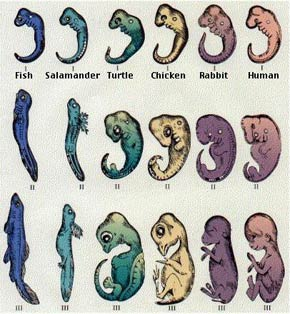
But then I realized that the MORP error is about the trailing edge (the early stages) and this is actually talking about the leading edge. And since human meaning-making is a collective affair, there's a sense in which you can't get very far ahead of the collective leading edge.
There's an open question of what sorts of things are possible in small groups that are intentionally seeking to further the leading edge, & doing some combo of: - starting with people at higher stages - training Could they get multiple stages further? How long would that take?
Here I think Kegan's "lowest stage you can be reliably triggered into" metric is helpful, because it measures the reality that pushing the leading edge can't on-it's-own shift the overall meaning-making system... also need emotional reconsolidation:
So the leading-edge experiences created when ppl are embodying the new culture provide a new sense of what's possible, & then these can be juxtaposed with the old sense of what's possible, allowing the emotional brain to update. I've done a bunch of this work (& have more to do)
People underappreciate the extent to which their embodied sense of what is possible is profoundly, profoundly limited by their life experiences.