@cosimia_ > difference between negative and positive motivation? Have thought lots about this. Seems there is, both inherently to any feedback system and specifics to human psychology implementation. It's adaptive for fear to overpower desire: those who don't flee don't survive.
Why fear-based motivation can't be aimed
11 tweets · February 2019 · 155 likes · 14 retweets · read on Twitter
@cosimia_ This makes sense when dealing with real acute danger, but for some time now* humans have been living in tense states of chronic fear. Due to the power differential ☝ between fear & desire, this makes desire-based motivation hard to tap *(I've updated a few times about how long)
@cosimia_ It seems that if people can narrow their view sufficiently, they can sometimes do it for short periods. Sex or food, for instance. But trying to really think about the question "what do I want" quickly reveals that many people have no idea and are afraid to consider it.
@cosimia_ Very related:
@cosimia_ Part of the issue is (and this is why I say positive vs negative motivation are different in all systems) you can't AIM awayness based motivation. In 1-dimensional systems, this is fine because there's no aiming to do (as long as you don't go past the repulsor)
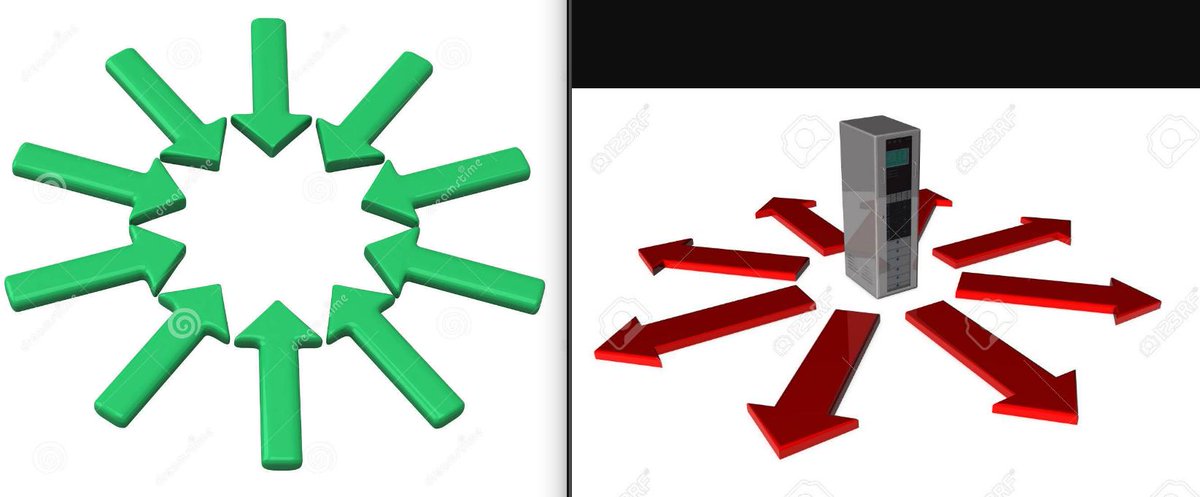
@cosimia_ But in 2D, you can already see that "away" is basically everywhere. Whereas with towardsness, you can hone in. As the # of dimensions gets large (and it's huge for most interesting things) the relative usefulness of awayness feedback gets tiny.
@cosimia_ Talked with @Conaw last fall and he pointed out that this is why role models are so important. It's not enough to have a sense of which behaviors will get you punished (btw: reward is just the temporary relief of punishment). You need to have a multi-dimensional destination.
@cosimia_ @Conaw "reward is just the temporary relief of punishment" might surprise; it connects with my remark at the top that most humans are in chronic fear. Reward represents temporary relief of that fear: don't worry, you're okay, you did the right thing—this time. Implicit threat.
@cosimia_ @Conaw ⚠Important⚠ Not all consequences are rewards/punishments. If you're trying to catch the bus and you make it (or miss it) that's not a reward (or punishment). (This confusion is common, which is making me think just now that it must be part of the pattern, not a coincidence.)
@cosimia_ @Conaw While I'm at it: not all FEEDBACK 🔃 is reward/punishment either. You can choose to interpret everything you experience as reward & punishment, or nothing. Both are coherent. (The latter ≠ being oblivious to fact "this person is trying to punish me"; means not internalizing)
@cosimia_ @Conaw Btw: "positive" & "negative" are confusing words. Common mapping is: ➕positive ~= desire ➖negative ~= fear (& disgust, etc) but in control systems... ➕"positive" feedback ~= fear. "I need to increase this gap" ➖"negative" feedback ~= desire. "I need to close this gap"