Threads

Why 'sin' doesn't mean 'miss the mark'

16 tweets · August 2024 · 80 likes · 1 retweets · read on Twitter

I normally love argument-from-etymology but "sin"="miss the mark" always grinds my gears. I think because it's a motte-bailey; in practice, connotationally, it means something almost the opposite! wait—that's not even IN the word "sin"! "sin" has a totally different etymology

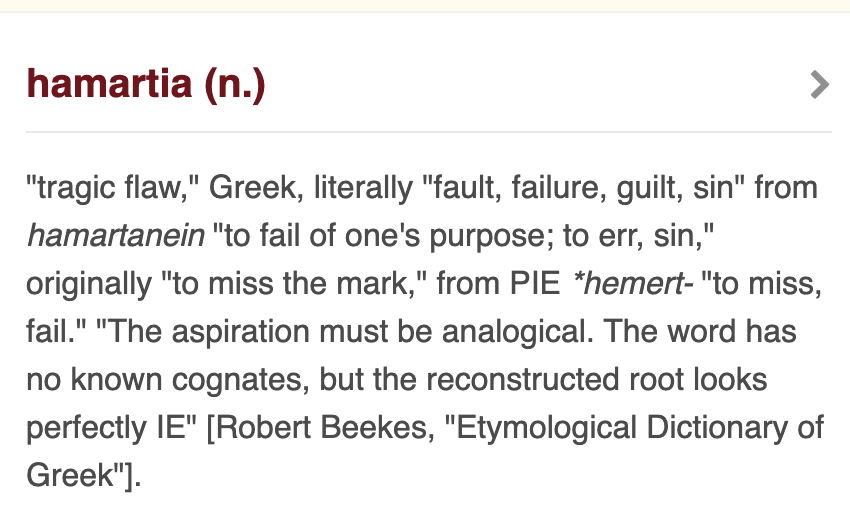
you are perhaps thinking of the greek word "hamartia"! THIS word did originally have a non-moral meaning, and then only later when imported to christianity, did it gain a moral one

however! the Hebrew term both: - does have a root in "miss the mark" - doesn't seem to have had a non-moral meaning for a long time!

in any case, we must ask: - do Hebrew-speakers use "chata" for missing a 🎯? with no guilt, just "oops" - do Greek-speakers still use "hamartia" for that? - do English-speakers use "sin" for that? and at least in the last case, I am pretty confident the answer is "ofc not"!

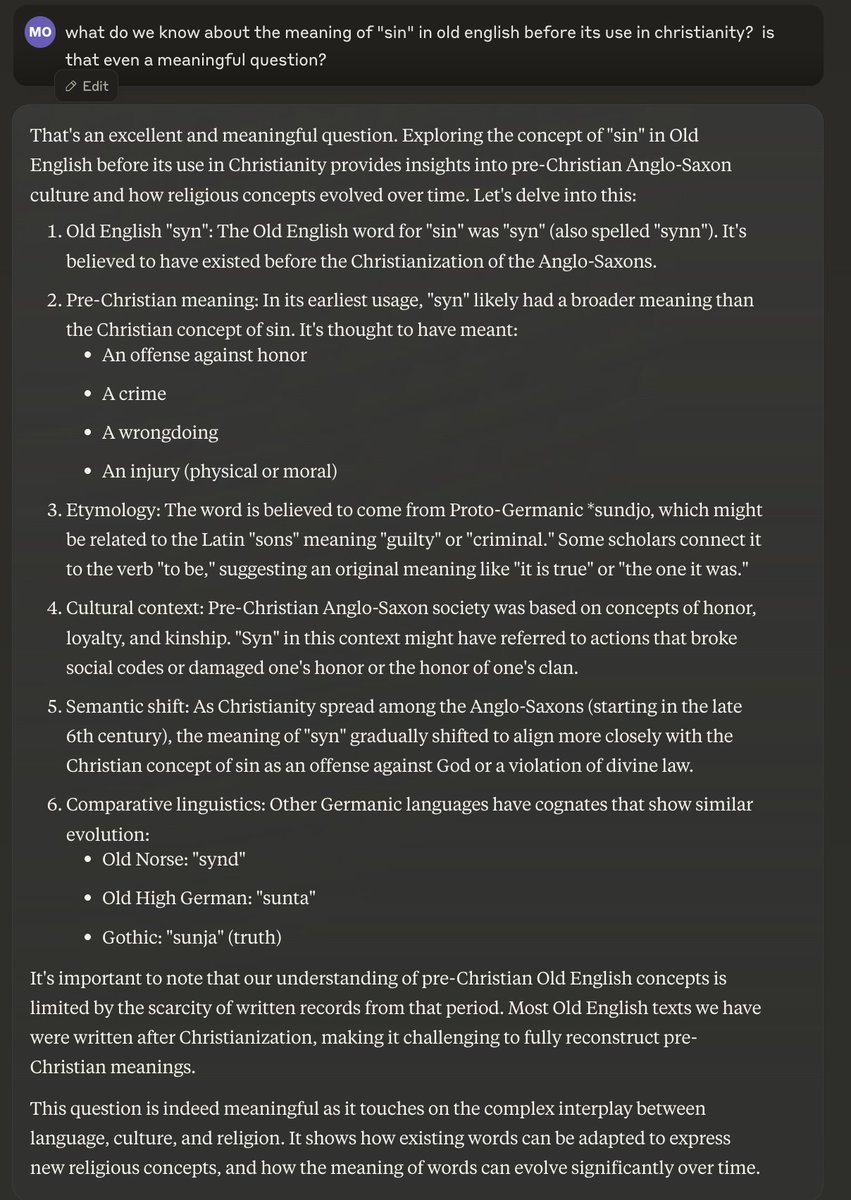
so stop saying "sin" = "miss the mark" when it clearly doesn't! here's the actual etymology of "sin", which basically comes from "to be truly guilty of" (whether a crime, injury, shenanigans, or violation of divine law)

if the Christians in the time of Old English had wanted to pick a verb that didn't have the connotation of guilt and offense, they could have used perhaps Unþeaw, which meant "bad habit" or "vice" or various other terms roughly meaning "mistake"! they did not choose those words.

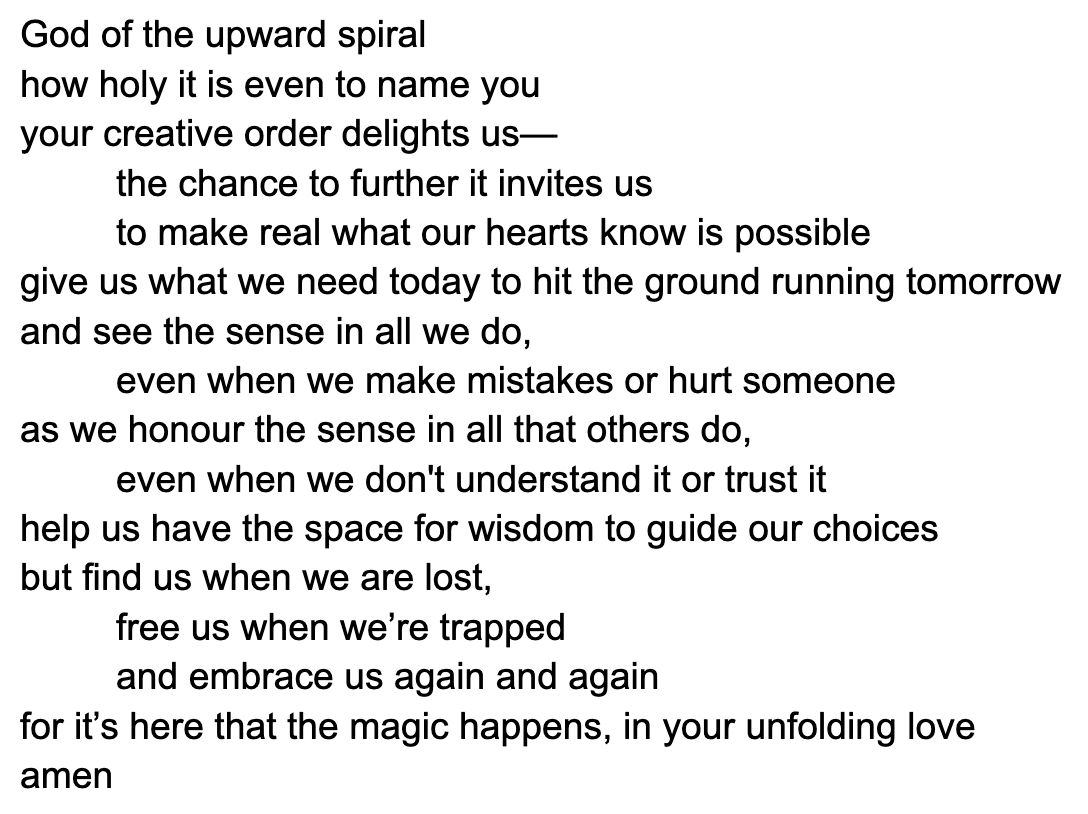
also, Christians now could choose to play the game with new words there's nothing inherently right about the word "sin" does your hamartiology still make sense when you say "make mistakes or hurt someone"? who defines what counts as "sin" for you? why?

Malcolm Ocean 🏴‍☠️ @Malcolm_Ocean ·

a prayer I've been unfolding this year

here's some speculation from Claude about how the term "syn" might have evolved from meanings more like breaking a social code or damaging one's honor not a hard move—the everything-God is the Code of all Codes, the Clan of all Clans

all of this brings me to the interesting puzzle about whether "sin" is supposed to connote failing at a socially-defined duty (which in practice it absolutely does to christians and jews today) or failing at being in good harmony with all of reality

this definition 👇 highlights that tension 👁‍🗨some sins ARE socially defined, because you can harm the stability of your society by breaking norms 🛬but other sins are defined by the laws of physics and trust-dancing and so forth; they simply will not work

Malcolm Ocean 🏴‍☠️ @Malcolm_Ocean ·

"sin" as: doing something that might be locally good for you but destroys the environment on which you rely

of course, historically there has tended to be equivocation between these two meanings! you can make an argument for why from memetic evolution or from authoritarian corruption; both have merit!

@wolftivy has an interesting article on this (which doesn't note that historians are unclear on whether there was a single guy named Abraham who made these moves. but the story nonetheless points at a shift from socially-defined values to universal ones) palladiummag.com/2023/07/13/don…

this universal, self-evident reality, is a major part of what I orient to when I orient to God I both believe it, and believe in it (although both of those are weird phrases—I see it, I love it.)

Malcolm Ocean 🏴‍☠️ @Malcolm_Ocean ·

I believe in* God** *put my weight behind, bet on, ally with (as in "I believe in you" or "I believe in this mission") **the largest-scale forces of creativity & love in the cosmos

and I've found lots in Christianity that resonates with that universal self-evident reality: ❤️‍🔥 agapic love 🫂 forgiveness 🙏 sacredness of every single person 🏳️‍🌈 pluralism

Malcolm Ocean 🏴‍☠️ @Malcolm_Ocean ·

Jesus articulating the meta-protocol (Matthew 5:43-48) twitter.com/Malcolm_Ocean/…

and I've found lots in Christianity that doesn't resonate with universal self-evident reality: 🧑‍⚖️ punishment 🚱 parochial arbitrariness treated as eternal 🙃 gaslighting people on their basic goodness-badness sense

Malcolm Ocean 🏴‍☠️ @Malcolm_Ocean ·

the worst psy-op of all time comes in many forms but reduces to "bad is good, actually"

as a final comment: another common translation of sin is "iniquity", whose etymology is simply "unequality" in other words... violating the symmetry inherent to moral intuitions!

Malcolm Ocean 🏴‍☠️ @Malcolm_Ocean ·

"moral intuitions are generally symmetry intuitions, so fixing asymmetries in your direct phenomenology should allow much clearer direct perception of things likely to be perceived as moral/immoral" — @RomeoStevens76