@MSlavin Yeah, so basically there are two ways that memes can propagate themselves: 1. they somehow convince people they should propagate them, with complete disregard to the impact of that 2. they are true/valuable, and therefore people want to use & share them
Two opposing memeplexes: memes that resist change vs memes that invite it
13 tweets · October 2019 · 14 likes · 0 retweets · read on Twitter
@MSlavin These two ways operate in fundamentally opposed way, because they have different error-correcting mechanisms. For #1, error-correction means "keep meme the same even if you don't understand it" For #2, error-correction means "modify the meme to be better"
@MSlavin Therefore a given memetic host (read: person, group, civilization) will be much more hospitable to one type of memes, so these two types form two large opposing memeplexes—potentially they're THE two largest opposing meta-memeplexes that could possibly exist. 😮 (~ GameA, GameB)
@MSlavin So the type-1 attractor is static, bc its "the set of memes that are [so far] best able to keep people from changing them into something else". Ofc, change still happens. Whereas type-2 attractor is dynamic, bc its "the set of memes that most empower creative exploration"
@MSlavin At early phases in humanity, our development of explicit concepts & reasoning tools had barely begun, so cultures knew more than their ppl, and creative attempts to modify existing memes would tend to produce worse (often fatal) memes. This book expands:
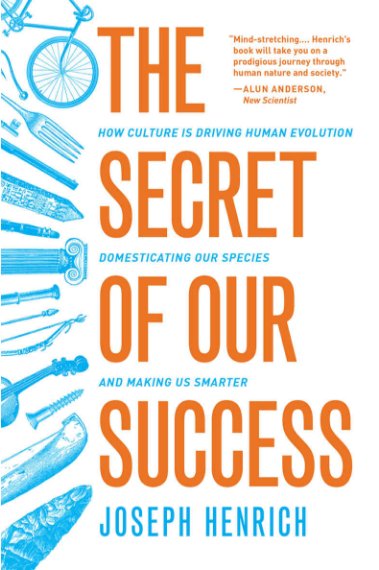
@MSlavin So an early human needed to somehow NOT attempt to fix things that seemed problematic or inconvenient. And it seems the solution that evolution came up was memetic (not genetic) which was to traumatize people into not innovating.😬 💯 thread on this cxn:
@MSlavin By contrast, now we can develop a model of why existing solutions work, and design better ones that will also account for externalities. Or... somewhat. Blindspots are rampant. Daniel Schmactenberger points out side fx can be worse than original problem! anchor.fm/emerge/episode…
@MSlavin Note that about here 👆 is where my understanding is different than Deutsch's. He seems to be profoundly unconcerned about the idea that we might create a new problem that we can't solve in time. The opposite comforting-certainty of this: twitter.com/collinofzion/s…
@MSlavin He also doesn't seem to meaningfully recognize that we're in a transition phase. Like he obviously knows that everyone is still traumatized and not maximally creative, and yet his book gives impression that current prognosis is as if already GameB. Thread
@MSlavin Oh, one important thing to note is that unlike GameA, which is suggested to start around the transition to agriculture, Deutsch makes a solid case that the static memes (& their coercion) actually go back to very beginning of human culture!
@MSlavin But clearly there's a sense in which hunter-gatherer societies were less crazy-making than ag/GameA ones. I have a few theories as to why, the most interesting of which is that in agri society you have to let your kids starve to have seedcorn for next year → dehumanization.
@MSlavin I actually think that in some ways things are crazier now than in the past, bc of profound tension between old way & new way. Instead of traditional, choiceless mode: meaningness.com/choiceless-mode ...we have an incoherent mess of judgmental anti-judgment:
@MSlavin aha I have now written a blog post that talks extensively about the pre-anti-rational and the anti-rational and how things are crazier now building on DD's theories here malcolmocean.com/2023/07/supere…