Today I wrote up 1700 words to share with a small group of collaborators, describing my financial situation and (more interestingly) some patterns/tendencies I've had in how I relate to money. I recommend trying something similar (even if you just share with 1 person) WhyHow👇
Documenting how I actually relate to money, and sharing it
19 tweets · November 2019 · 120 likes · 1 retweets · read on Twitter
For some ppl, this might be valuable for causing you to look at a balance you've been avoiding. I didn't have one of these, but I did notice I was spending a bit more on groceries & less on other things than I thought. But that's just the numbers. The juice is in the thinking!
Here are the headings of my document: - Accounting for income taxes - Middle-class scarcity - Patterns around “saving” - The realness of money - Working with generosity - Scarcity stress - One time & recurring purchases
I noticed lots of patterns I wanted to shift in one way or another, maybe to improve the managing of my money itself, or to improve my experience of relating with other ppl. But I focused on laying it all out in a post-shame way: This is just how I've been thinking about money!
It got me here, and it won't get me there.
There's a principle in improv: the more obvious you are, the more original you appear.
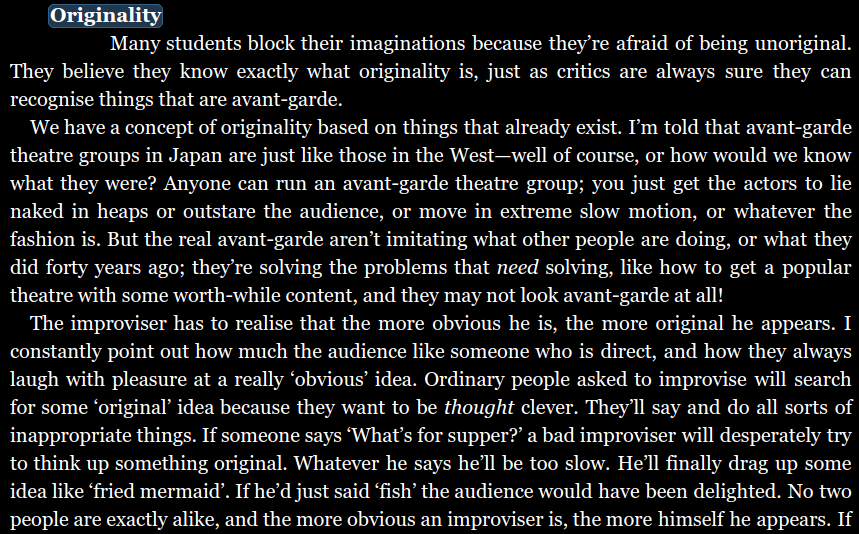
I attempted to document not how I *should* think about money, not how I *wish* I thought about money, simply how in fact I apparently do. Most of it was obvious and easy to write. And yet—a revelation!
I was expecting my obvious thoughts to be a revelation for others (about me, and perhaps about humans more generally) but I didn't appreciate the extent to which it's also been insightful for me to see my thinking laid out in front of me.
This is intriguing, b/c I've long been aware that writing helps me clarify things. I think it comes back to the improv thing. I held an assumption that writing was valuable to help me clarify *original* ideas, and it never occurred to me to just document my thoughts on a subject.
Of course, this is far from an original insight. But this is by far the strongest experience I've had of it.
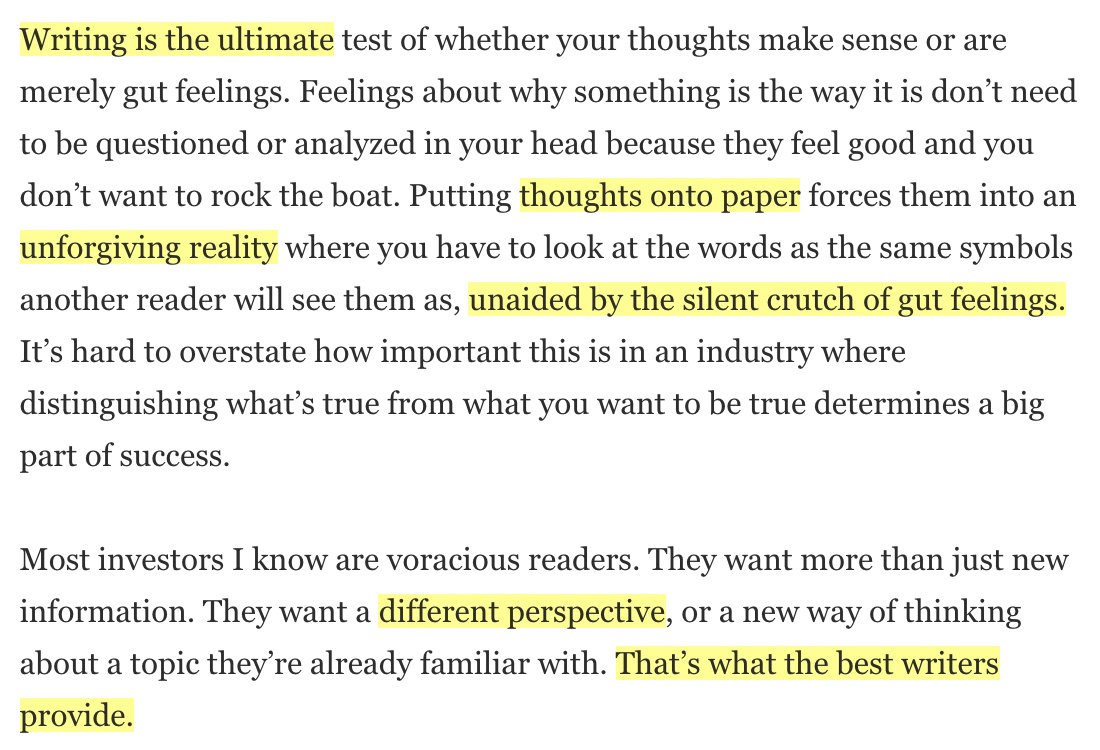
It emerged in this situation because a few people very close to me revealed that they didn't have a clear sense of my financial situation, and it suddenly occurred to me that there were a bunch of obvious-to-me details that would be in-sightful for them.
Now I want to do this for a dozen other domains... My relationship to things like: - food - sex - reading books - school ...I don't feel like I "have something to say" on these topics, & maybe I don't in the grand sense. But it'd be neat to see what I *would* say.
(I think this (beyond being The Friendliest™) is part of why @visakanv is quite popular on twitter—he writes about his experience, and follows his own interest and what feels worth saying, but doesn't worry about saying original things)
If you want to try this exercise re $, allow me to propose some simple Qs as writing prompts: - how do I relate to saving? - to scarcity? - to generosity? - to debt? - to wealth? - to paychecks? - how did my parents/childhood affect my relationship with money?
More, if you want: - what really freaks me out about money? - what do I not know/understand about money? - "unlike many people I know, I..." - "I hate to admit it, but..."
Again, the mission is not to produce *advice*, nor to criticize what you notice. Put your anthropologist hat on, and observe the culture in your brain. Your shoulds around money are just part of the data. "I seem to have a should about..."
And then, if it feels comfortable, share it with your partner, or if that's too terrifying then maybe share it with a close friend who doesn't have a stake in your life but who knows you well and would find it fascinating—both "aha, I always thought" 😉 and "huh I never knew" 🤔
I'm realizing that one way to think about what I'm doing here is eliciting some of the high-level schemas for how I've been thinking about money, so I can be more conscious of them. Schema in the sense described in this book @QiaochuYuan & I are 🤩 about:
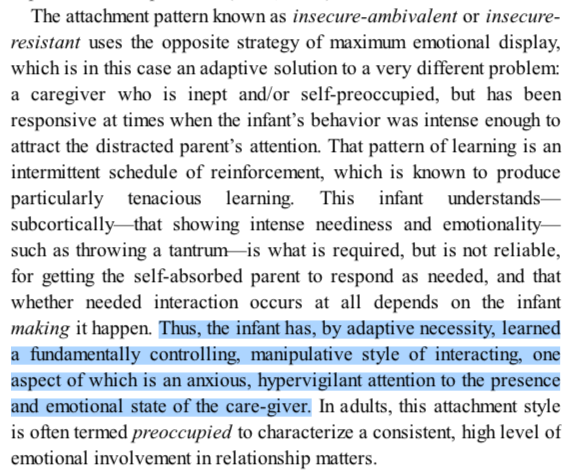
This then will allow me to better see that sense that it makes to do what I'm doing, & also the ways in which what I'm doing doesn't make sense. None of this is possible until it's made conscious in a post-judgmental way. (Still some layers to go to reach the emotions tho)