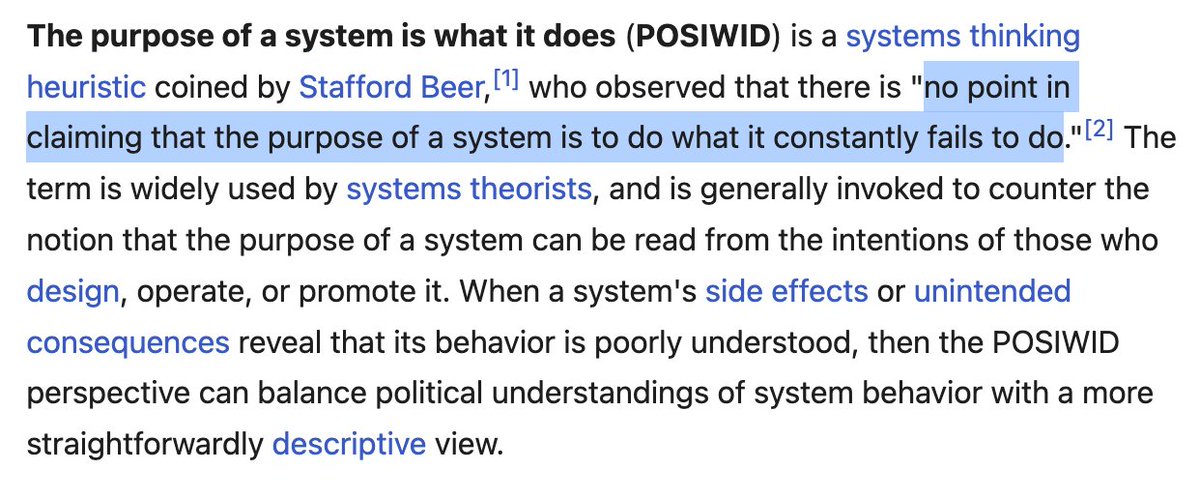
these two meanings of purpose are subtly related at the most basic level of the unfolding of everything: EXAPTATION, the part of evolution where something gets repurposed 1/x
Exaptation and the two meanings of purpose
16 tweets · July 2024 · 49 likes · 5 retweets · read on Twitter
I got the idea of "exaptation" from Reinventing the Sacred by Stuart Kauffman which is basically a really solid rebuttal to Darwin's Black Box, the creationist science book which says evolution can't have done it all since no lookahead 2/x
an example: tongues! 👅 they obviously didn't come from nothing for the purpose of talking. but they were useful enough for food-related purposes until the moment when they got exapted for making precise sounds. and then, ordinary adaptation pressure made for better talking 3/x
a classic creationist example: wings! 🪽 but it turns out that a wing that's too small to fly with is still good for keeping your young warm (something wings are still used for!) AND the bigger the better because it lets you warm more young! until... 🛫 youtube.com/watch?v=371WvR…
Kauffman carefully deconstructs reductionism, which is necessary because in order to talk about how apparent purposefulness shows up without an agent, you need to be able to talk about how the explanatory arrows sometimes point upward! ⬆️! well, 🔃 5/x
then he says: consider a heart 🫀 you can try to account for why the cells & atoms are arranged as they are by pointing downward, but this doesn't really answer. they are the way they are because they need to be in order for the heart to do what it needs to do. ie, purpose! 6/x
this is a purpose that doesn't require a designer but it does require some criterion in relation to which which we can say the heart works (or works better/worse). what the heart is for is emergent, and it could get exapted for something else any time 7/x
this phenomenon is deeply core to the profound tautology that is evolution. evolution = there tend to be more of the sorts of things around that tend to stick around and/or make more of themselves exaptation = [my best tautology attempt in 15 mins] 8/x
so returning to "the purpose of a system is what it does" > "purpose" is what it's /meant/ to do, which is sometimes relevant, and useful to contrast against what it /actually/ does. I agree with this wholeheartedly. the contrast IS useful. however! 9/x
we might think that the true purpose question is "what brought the system into being in the first place?" not "what allows it to continue existing?" (the exapted purposes) those seem clearly distinct: the first is the /meant/ and the second is the /actually/! 10/x
the problem is, any given complex system was, in part, brought into existence by those exapted purposes. where is the clear line that separates the relevance of the original purposes from the relevance of the exapted purposes? 11/x
it's not that there is no clear line! there is. it's just... inside a person. one can say "my purpose in hosting these events" or "the founder's purpose for their company was allegedly", but there is no such "the purpose" 12/x
there is no such "the purpose" for the actual (complex) system you're observing because the actual system you're observing was not created solely by its designer to realize a single purpose, but by the interactions of that designer's process with other agents & forces 13/x
anyway! I'm excited about exaptation, because it highlights that purpose is actually more fundamental than agents are, in a sense and none of this is incompatible with what we know of physics, but it's a totally different way of looking at everything! 14/x
much much more to say about exaptation in the future, but for now if you want to explore it further then you might enjoy this video that speaks to some of why it's one of the most beautiful and empowering ideas I've ever encountered 15/x youtube.com/watch?v=Ub4_kr…
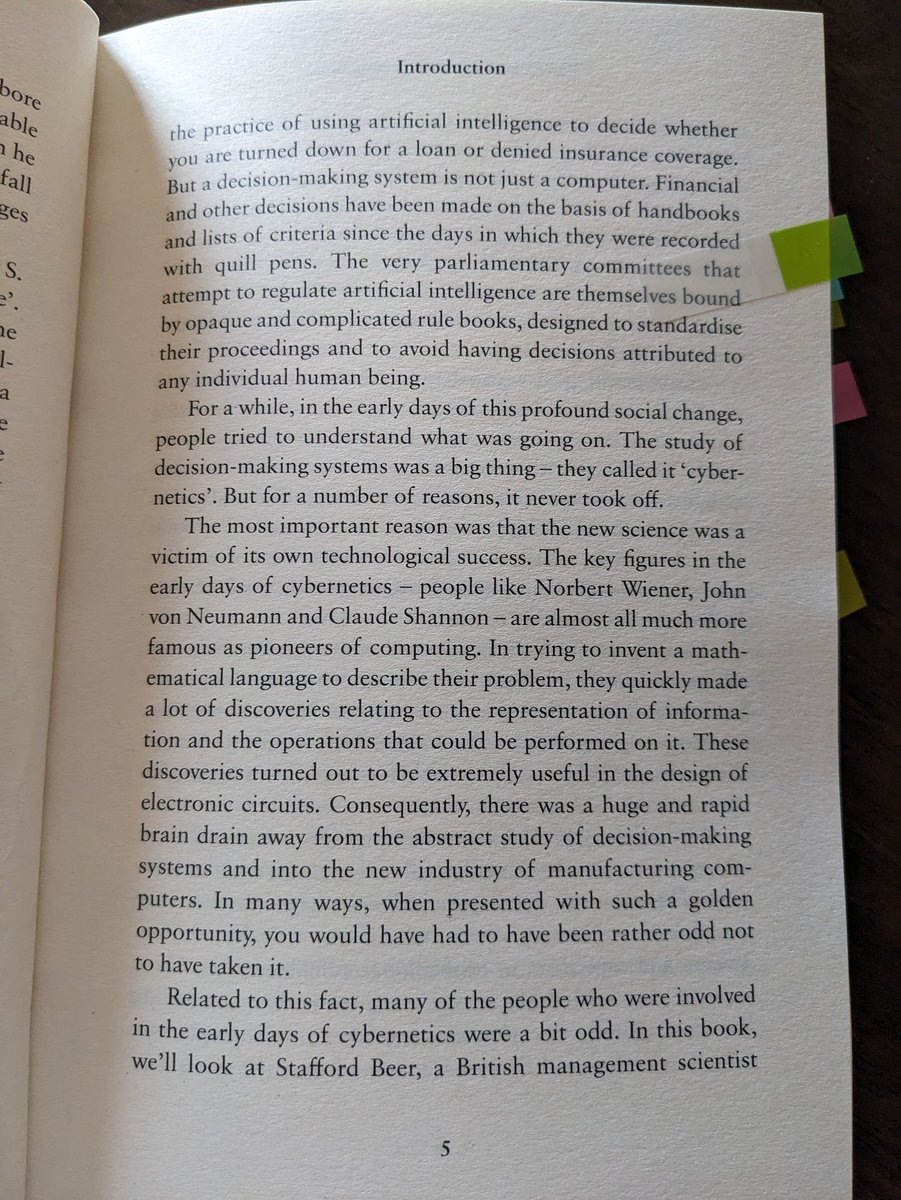
also! it turns out that the "the purpose of a system is what it does" (POSIWID) heuristic/quote comes from Stafford Beer, the central thinker in this book I picked up last week! 16/16