something many people probably don't know is that I've been oriented to "shifting from a coercive mindset to a collaborative one" since 2012 I say this in part because there's a lil cred 😛 but mostly to point at how long the journey can be! this is FAR from an overnight project
Ten years of shifting from a coercive to a collaborative mindset
6 tweets · February 2022 · 62 likes · 1 retweets · read on Twitter
I think that the fact that there are now dozens-to-hundreds of us talking about noncoercion here in public is an asset and a liability it was WEIRD in 2012—almost nobody understood. very cool to have it kinda normalized on the flipside though, normalization creates pressure
part of the puzzle with the whole thing is that "don't coerce" is either self-evident & unnecessary, or a paradox/koan either you already aren't coercing 🙃 or you are, and the only way to follow the instruction is to try to coerce yourself into not coercing, which won't work 🤦♀️
for the record, my suggestion instead is to focus on: - doing what you feel like (when that is clear) - understanding the nature of feedback loops such that it becomes more & more obvious what coercion is, why it creates tangles, and how to do something different
for understanding, Perceptual Control Theory (PCT) is a very powerful foundational model of intrinsic towardsness-based motivation this book in particular is a great intro:
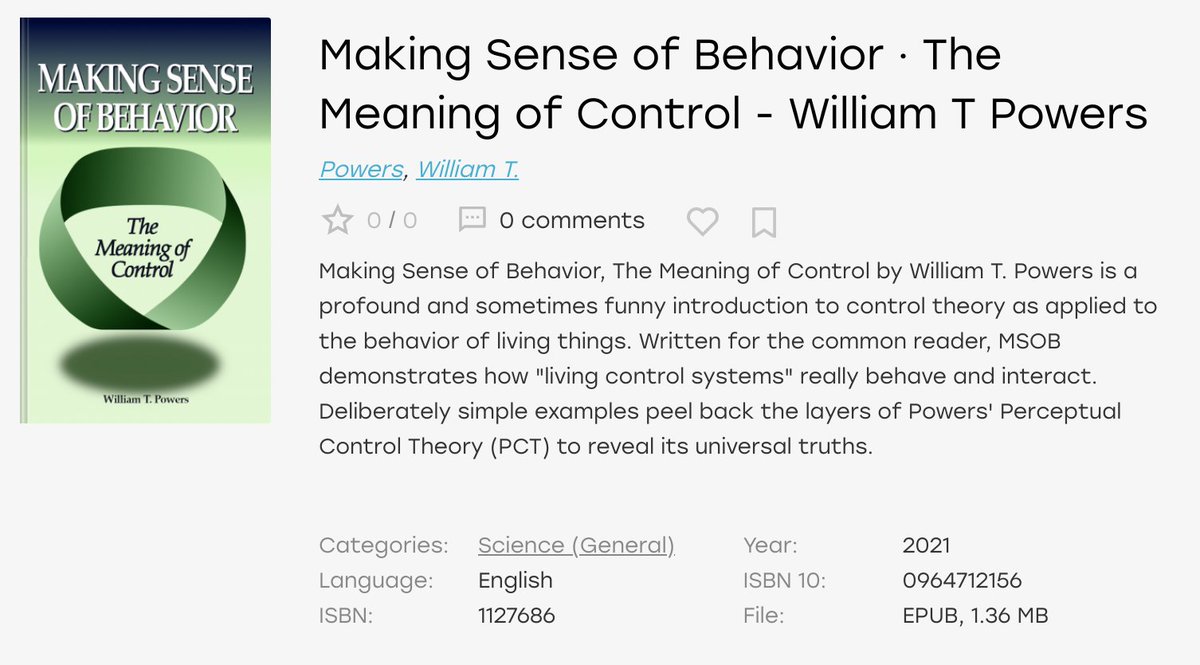
also I mostly haven't been thinking in terms of coercion but about trying to aim for a mindset/culture of "collaboration", fwiw, with a pretty clear sense of what that looks/feels like it was contrasted with coercive mindset/culture but we weren't thinking of it as "noncoercion"