Mmm, this is reminding me that there's a specific copywriting problem that's unique to meta offerings like this: > I'm building a small course to help you figure out what you truly want in life and how to get it. I've encountered the same thing with @CompliceGoals.
The copywriting problem unique to meta offerings like courses and goal systems
12 tweets · November 2020 · 18 likes · 0 retweets · read on Twitter

If you want to sell someone deodorant, the sales pitch is "our deodorant is better than the other one you're using". Maybe you say it's healthier or greener, maybe you say it'll get you laid. Whatever. There's some sort of selling point, and a comparison.
If you want to sell something that solves a problem people currently have no solution for, then you just need to identify their pain point in a way that makes them feel seen & heard, and then they'll assume you have the solution. (which may be naive 😆👇)
But if you want to sell "I have a device that solves your problems (or empowers you to)", which is what any system for productivity, personal development, life-clarification, goal-setting, etc, does… …well, what's the catch? *Obviously* everyone would want this, IF it works.
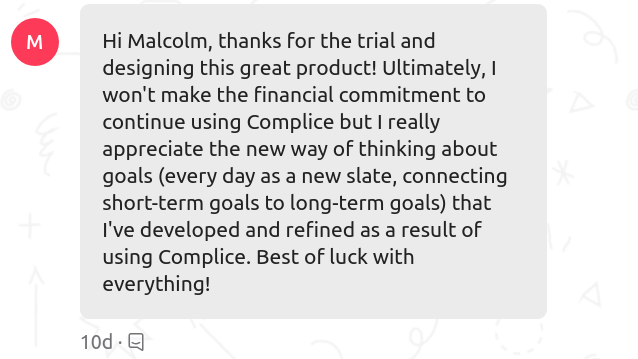
So you need to empower people to figure out (before purchasing) whether this is the sort of thing that might work for them. A free trial can be one way, and it's worked well for Complice because it gives people a firsthand taste of a different approach:
But a free trial doesn't work as well for a course, and in any case you need to help people self-identify whether they want to sign up or not. Not gonna pretend I have a proper taxonomy here, but approaches include: - say who's not a fit - present an archetype - vibe with people
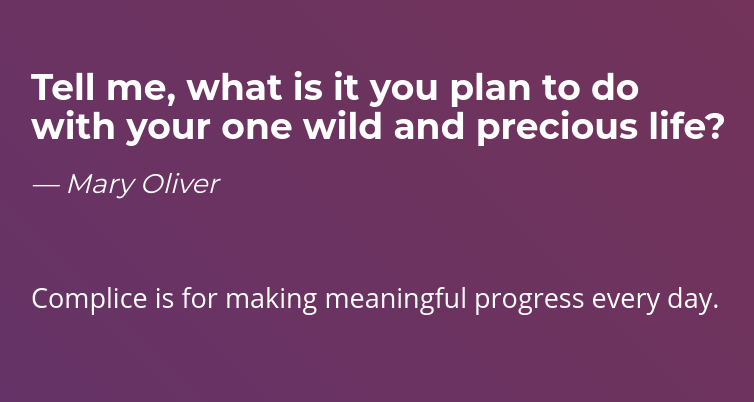
complice.co has this quote on it, which is designed to emotionally evoke a meaning-oriented vibe in relation to productivity. It reminds you (gently) of the finiteness of life, and nudges you to consider that your existing approach might be out of touch with that.
To @Neats29 — since your course comes out of your own experience, what you probably want to do is tell the story of how you were stuck in unclarity about what you wanted, and see who resonates with that and who doesn't.
Was gonna say that the intended effect of that is "WHAT? I thought I was the only one!" but that's actually only true if you thought that about yourself too. Point is, inducing some quality of surprise & self-recognition with this story is desirable.
My suggestion would be to message a dozen friends directly and have a conversation with them where you find out if they would be a good fit for your course, not to sell them on it but to refine how you articulate the story to produce that recognition.
For more thoughts in this general area (including specifically re messaging friends) I have a blog post from a few years ago, that I would probably frame differently now but I expect to still be useful to people. malcolmocean.com/2016/09/awkwar…
The other half to the "what's the catch?" above is the question of whether your solution *does* actually solve their problem. Herein lies two reasons to work directly with at least a couple people: 1. to ensure that the thing *does actually work* 2. to get some testimonials