Sem: a tentative proposal for a verb to replace "think" & "feel" and help avoid mind-body dualism in daily utterances. "I sem that X" = "I think/feel that X" "I'm semming" = "I'm thinking/feeling"
"Sem": a neologism to replace think and feel
14 tweets · April 2022 · 36 likes · 1 retweets · read on Twitter
I got started semming about this awhile back by wondering about the potential relationship, etymologically or morphologically, between: - "seems" - "semantic" seems they have unrelated roots—so close though!
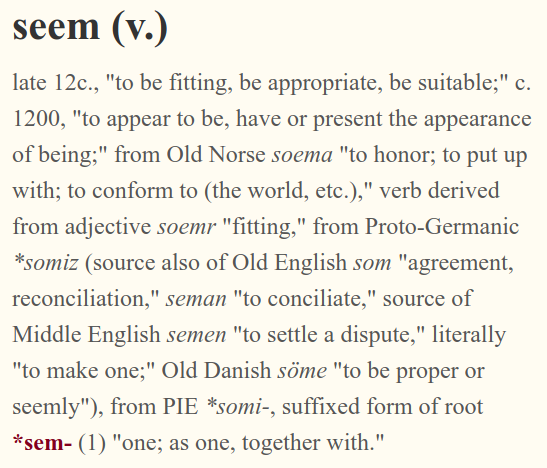
I've long wanted a word that could be used like "thinking" or "feeling" but had connotations more of meaning-making instead. "It seems to me" is close but doesn't lend itself to replacing "I think ____" "suppose", "reckon", "figure", "interpret", "construe" ...? too many steps
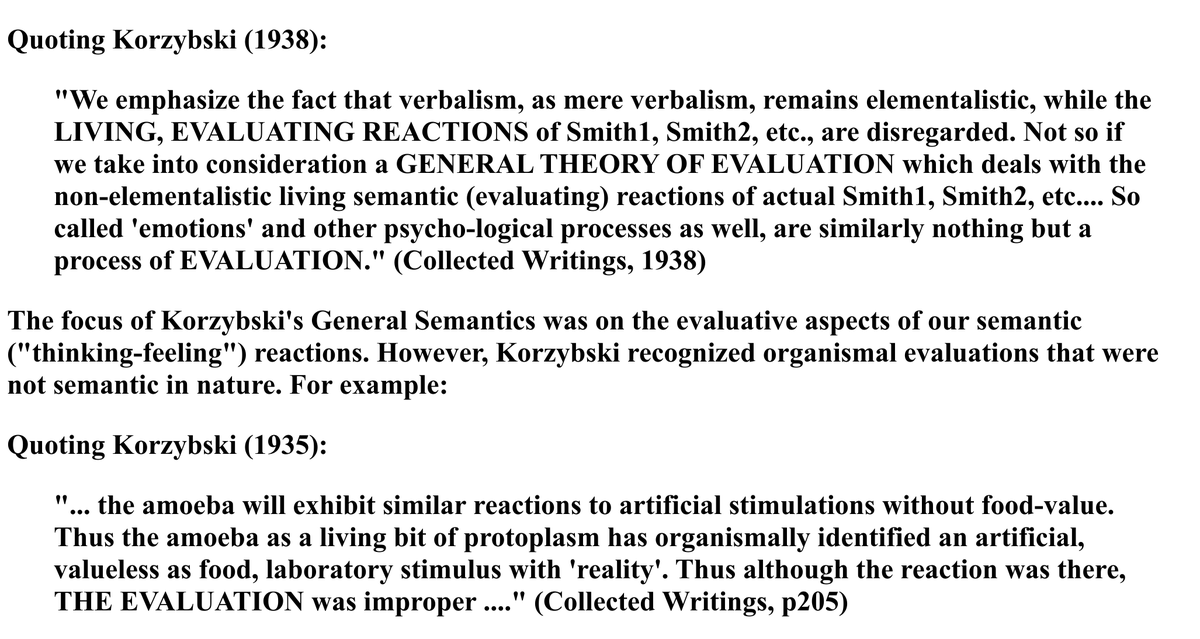
Korzybski proposed "semantic reactions" (which he abbreviates "s.r.") which is exactly the thing I'm looking for—as I recall, it may have been what inspired the search—except WAY too cumbersome. "I'm having a semantic reaction that ____" 🧐
Might need to coin a new word to intertwingle thinking & feeling: what about "sem"? I sem that might work actually! sem, v. to have a semantic reaction sem, v.transitive to have a semantic reaction in relation to (but you can also just sem of it as think+feel) #neologizing
I'm valuing having "sem" defined by reference to "semantic reaction" although of course a formal definition—especially of a neologism—is unlikely to capture the in-practice-meaning of a word.
Yet I also sem that if Korzybski had been developing general semantics not in the 30s but *after* cybernetics & systems theory emerged in the 60s, then he would have used a term other than "reaction", which feels sort of behaviorist—stimulus & response.

I'm thus inclined to suggest "semantic interaction" as a replacement for "semantic reaction", which will probably go without contest as almost nobody was using "semantic reaction" in the first place. So then: sem, v. to have a semantic interaction
according to this site, Korzybski actually found himself later regretting his own use of the term "semantic" (people took it too narrowly—just linguistic, not about meaning-making) stevenlewis.info/gs/sr.htm
I've noticed while drafting this: "think" & "feel" get phrased slightly differently! > you can also just sem of it as think+feel (clearly replacing "think of it") > you can also just sem it as think+feel (more like replacing "feel it") it's much more intimate without the "of"!
I'm semming about how we typically ask: "how do you feel?" vs "what do you think?" Feels to me like either could be used with "sem", and they'd carry different meanings: "how do you sem?" → process, withness "what do you sem?" → content, aboutness

The presence of these two meanings invites the awareness that we can't be semming *about* something, without semming about it *in a particular way*. There's no what without a how. Everything is in relation. This is what Korzybski was pointing at w/ "semantic reaction"
A related sem I've had is about the difference between believing & perceiving. If our opinions differ, maybe one of us is wrong. If our perspectives differ, well, we're probably looking from different angles.
For another exploration into queering thinking & feeling, check out this emoji concept I've mocked up. Could use someone to actually take it through the proposal stage—I have a ton on the go and haven't yet found time to write it up, but I'd love to help.
